
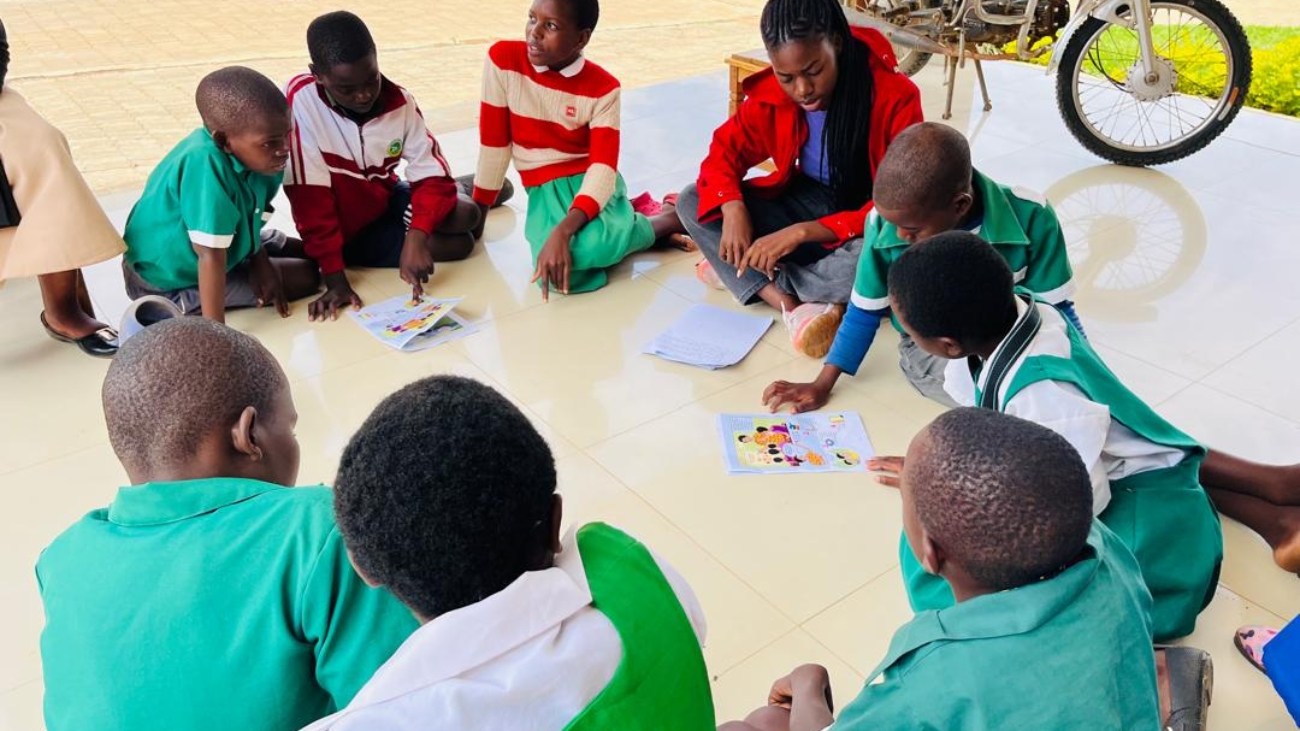
Pretesting of cholera comic book with primary school students in Dedza

Communicating Mpox: A Community-Centred Approach to Public Health Messaging in Malawi

The Emergence of Mpox in Malawi

When the first case of Mpox was recorded in April 2025 in Malawi, the disease was new and unfamiliar to most communities. Unlike Cholera, which has affected the country for decades, Mpox entered public awareness surrounded by uncertainty, fear, and widespread misinformation.

Myths spread quickly, and many people did not understand what Mpox was, how it spreads, or how it can be prevented. In public health emergencies, misinformation can travel just as fast as the disease itself.

Responding to the Need for Accurate Information

In response to the growing need for clear and accessible information, UNICEF Malawi, in partnership with the Ministry of Health Malawi, commissioned Eluby Consulting to research and develop multimedia communication materials addressing Mpox transmission, prevention, and response.

The assignment went beyond simply producing content. The goal was to develop materials that could correct misconceptions, build public understanding, and support behaviour change during an evolving outbreak.

Starting with Research and Community Insights

At Eluby Consulting, we believe that effective Social and Behaviour Change Communication (SBCC) goes beyond sharing information; it requires working with communities, not just for them.

Guided by Human-Centred Design (HCD) principles and grounded in co-creation, we placed communities at the centre of every stage of the development process. This approach ensured that the messages reflected lived realities and addressed real knowledge gaps.

Through desk reviews and consultations with health experts, we examined available evidence on Mpox transmission, symptoms, case management, and prevention measures. We also assessed emerging misinformation trends and areas of confusion within communities. This helped us understand why fear and myths were spreading and what type of communication would be most effective in addressing them.

Co-Creating Solutions with Health Experts

We then conducted co-creation workshops with health experts from the Health Promotion Division and technical teams from UNICEF Malawi.

Together, we translated research findings into draft scripts and visual concepts that were technically accurate, culturally appropriate, and easy to understand. The process required multiple rounds of technical review and refinement. Some materials were revised several times to ensure clarity, accuracy, and simplicity without compromising scientific integrity.

Pre-Testing with Communities and Frontline Workers

To ensure the materials would be usable and well received by their intended audiences, we conducted pre-testing sessions with health workers, community volunteers, and learners.

These sessions allowed us to:

  • Test message clarity and comprehension
  • Assess how visuals were interpreted by audiences
  • Determine whether the materials were practical for community engagement

Feedback from these sessions was carefully reviewed and incorporated to strengthen both the content and the design.

Developing Accessible Communication Tools

Based on these insights, we developed several communication products designed to explain Mpox in a simple and actionable way.

These included:

  • An explanatory video outlining what Mpox is and how it spreads
  • A job aid to support frontline health workers during community engagement
  • An illustrated comic book explaining prevention, symptoms, and response actions

Each product was designed to make complex health information simple, memorable, and

practical for everyday use.

Quality Assurance and National Response

Following revisions, all materials were submitted to the Quality Assurance and Quality Improvement (QA/QI) team for review and endorsement.

We are proud that the materials met the required standards and are now supporting ongoing national response efforts in Malawi.

Lessons for Effective Public Health Communication

This assignment reflects what effective SBCC should be: evidence-based, participatory, and people-centred.

By applying co-creation principles and human-centred design, we ensured that Mpox communication was not only accurate but also trusted, accepted, and usable by the communities it was meant to serve.

Our Commitment at Eluby Consulting

At Eluby Consulting, we remain committed to designing communication solutions that empower communities, strengthen public understanding, and support national health priorities.

Sustainable change happens when people are part of the solution—not just recipients of information, but active participants in protecting their own health.
Mpox Comic book and Poster

Mpox video

IMG-20251220-WA0002

REIMAGINING CHOLERA COMMUNICATION IN MALAWI

Bringing Public Health to Life in Dedza

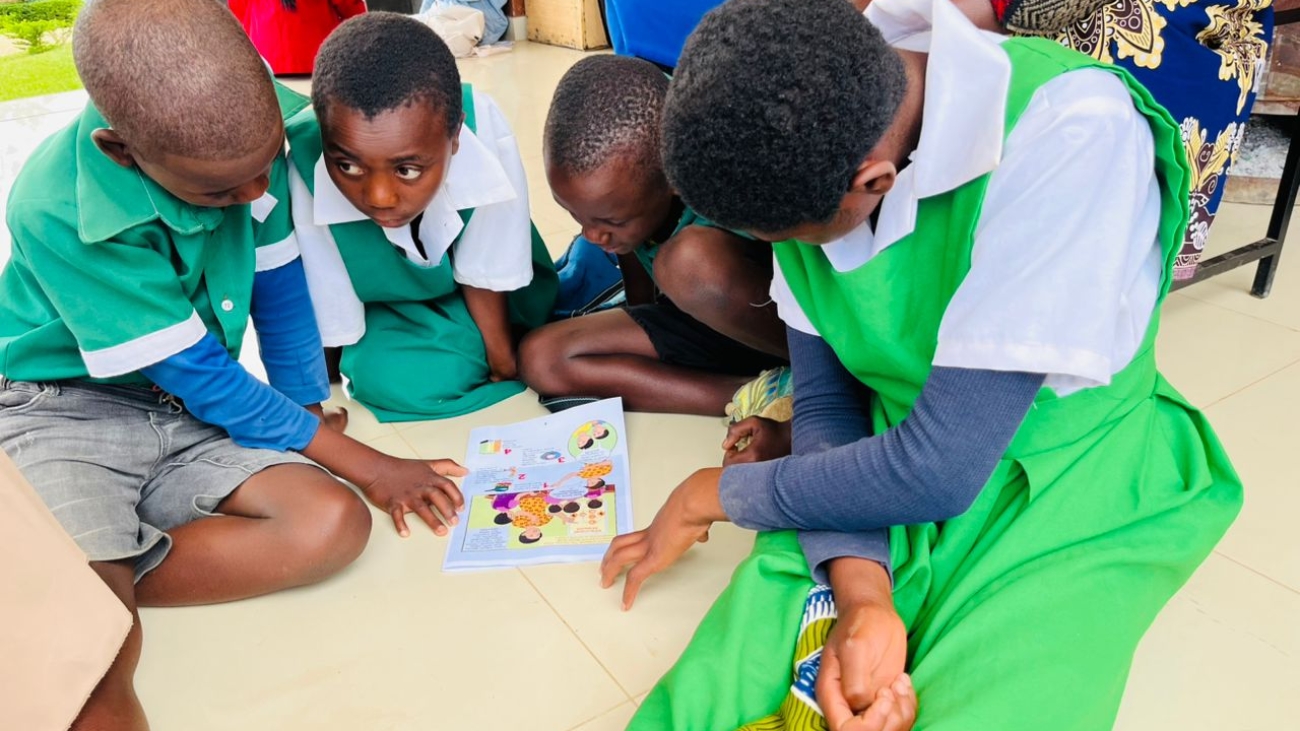
On a humid morning in Dedza, as rainy clouds gathered, Eluby stood before a group of Community Health Workers (CHW), teachers, and school children at St Cornelius Health Center. In her hands, she carried brightly illustrated comic books, job aids, and animated videos on Cholera and Mpox, which were shared among the participants. School children leaned forward over the books, teachers observed closely, and CHWs read and watched the videos quietly. Someone laughed at a character in the comic book and animated videos.

This is what public health can look like in Malawi when communication feels less like instruction, and more like a conversation.

“This is public health when communication feels like a conversation, not a lecture.”

The Persistent Challenge of Cholera in Malawi

Since 1973, when the first Cholera case was reported in Malawi, the country continues to face this endemic disease, affecting thousands in countless communities. Despite years of interventions, outbreaks resurface every year. This is not because information is unavailable, but because it is not always accessible, relatable, or easy to act on.

Traditional communication methods, such as posters with technical language, often overwhelm both leaders and listeners. But do these messages truly resonate with community experiences?

“High awareness doesn’t always lead to safe practices.”

Designing Communication That Matters

In 2025, UNICEF Malawi commissioned Eluby to research and develop multimedia communication materials on cholera transmission, prevention, and response. For Eluby, the goal was clear: to remind communities about cholera in a way that is simple, memorable, and actionable.

At Eluby Consulting, we believe communication is not just sharing facts, but designing meaning. Utilizing the principles of Social and Behaviour Change Communication (SBCC), we work with communities, not for them.

“Communication is most effective when it reflects the community it serves.”

Grounding Materials in Human-Centred Design

Guided by a Human-Centred Design (HCD) approach and co-creation principles, we placed communities at the center of every stage of material development. This ensures that messages reflect lived realities, cultural context, and technical constraints faced by those most affected by cholera.

“We design with people, not for them.”

Research: Understanding the Gap

We began with a rigorous desk review, examining decades of cholera data, response reports, behavioral studies, and past campaign materials. Findings revealed a pattern: high awareness of cholera did not always translate into consistent preventive practices. This helped us understand why cholera remains a public health challenge despite decades of interventions.

“Data doesn’t lie: awareness alone is not enough.”

Co-Creation Workshops: Shaping Context-Appropriate Content

We conducted co-creation workshops with the Ministry of Health, through the Department of Health Promotion, including representatives from the Ministry of Water and Sanitation. Findings and ideas were debated, and together we translated them into draft scripts and concepts that were relevant and context-appropriate.

“Collaboration ensures relevance and ownership.”

Community Validation: Listening to Real Voices

The real test came during pre-testing sessions at St. Cornelius Health Center in Dedza. Participants flipped through comic books, paused on illustrations, questioned phrasing, and suggested clearer alternatives.

“Can we show this character standing along the waters?”
“Would we really say it like this?”

These were not minor edits they shaped design decisions based on real voices. Feedback was carefully reviewed and incorporated to strengthen both content and design.

Quality Assurance and Dissemination

Following revisions, all materials were submitted to the Quality Assurance and Quality Improvement (QA/QI) team for review. We are proud that the materials were endorsed and that Eluby Consulting is now leading their dissemination.

“When cholera strikes, memory matters. Our materials are designed to stick.”

Communication That Sticks

These communication materials were crafted to recall, because when cholera strikes, memory matters. This assignment exemplifies what SBCC should be: evidence-based, participatory, and people-centered.

By applying co-creation principles and human-centered design, cholera communication became not only accurate but trusted, accepted, and usable.

“Messages work best when they are understood, accepted, and easy to act on.”

Philosophy in Practice

For Eluby Consulting, this assignment was more than a deliverable. It was a reaffirmation of our philosophy: work with communities, not for them.

Cholera Videos

Cholera comic book and job aid