Written by: Alinafe Phiri
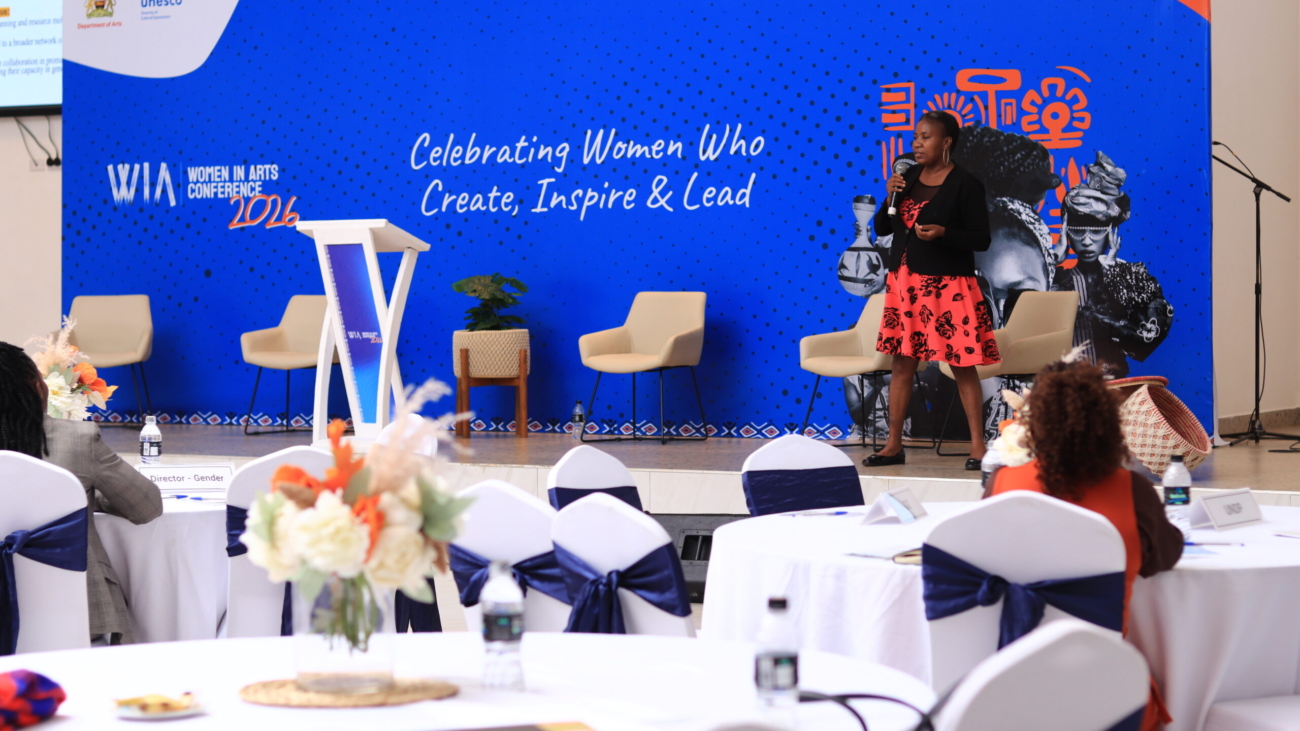
On 24 March 2026, music artists, filmmakers, visual artists and creatives from all corners convened in Area 6, Lilongwe, at Pearl Convention Centre for the 2026 Women in Arts (WIA) Conference. It was a day full of creativity, inspiration, and a shared commitment to advancing women’s voices in the arts. Yet beneath this exciting gathering, one statistic quietly re-framed the entire conversation.
Out of 23 stakeholders consulted across Malawi’s creative sector, only six were women. This single data point presented by Eluby Consulting as part of a study commissioned by UNESCO, raises a deeper structural question, what does representation truly look like in an industry built on voice, narrative, and expression?
Malawi’s creative sector is rich in talent and diversity, from literature to music, film, fashion, and visual arts. However, Eluby Consulting’s gender mapping reveals a persistent imbalance, not in participation alone, but in influence.
Women are visible across the sector, yet remain significantly underrepresented in decision-making spaces. In several associations, they constitute less than 10% of total membership. Leadership structures, executive committees, and governance boards continue to be dominated by men, limiting women’s ability to shape institutional priorities, funding allocations, and creative direction.
Even in organizations where women have attained leadership roles, these gains are often isolated rather than institutionalized. The disparity is not coincidental, it is systemic.
Eluby Consulting’s findings point to an interconnected set of structural constraints that reinforce gender inequality across the sector.
- Economic exclusion: High membership fees and low financial returns from creative work affect women, many of whom face additional economic responsibilities.
- Policy deficits: The majority of artist associations operate without explicit gender provisions or enforceable anti-harassment frameworks.
- Cultural norms: Persistent perceptions that the arts are unstable or unsuitable for women discourage long-term participation.
- Institutional inertia: Even where gender equality is acknowledged in principle, enforcement mechanisms remain weak or non-existent.
Together, these dynamics produce a sector where women are present, but not fully empowered.
Despite these challenges, study findings show critical points of progress, evidence that transformation is both possible and already underway. Several associations have begun to adopt more inclusive practices, including:
- The introduction of Gender Desk Officers
- Increased representation of women in leadership roles
- Mentorship and capacity-building initiatives targeting women creatives
- Platforms that intentionally amplify women’s artistic voices
These interventions, while still limited in scale, demonstrate a key insight, that gender inclusion does not occur organically, it is the result of deliberate institutional design.
The implications of these findings extend beyond equity, they speak directly to the future of the industry. A creative sector that under-represents women is not merely unequal, it is incomplete. It risks narrowing its narrative scope, constraining innovation, and limiting its economic potential. In contrast, a more inclusive sector benefits from diverse perspectives, richer storytelling, and expanded market relevance.
Gender equality, in this context, is not symbolic. It is foundational to the sustainability and competitiveness of Malawi’s creative economy.
Eluby Consulting’s work is distinguished not only by its analysis but by its clarity of direction. The study outlines a set of actionable interventions capable of driving systemic change.
- Institutionalizing Gender Desk Officers within association governance
- Reforming constitutions to include enforceable gender equality provisions
- Reducing financial barriers to women’s participation
- Strengthening partnerships with civil society and development actors
- Establishing clear accountability systems, including reporting and safeguarding mechanisms
These recommendations are pragmatic, scalable, and grounded in the lived realities of the sector.
The statistic, six out of twenty-three, was no longer just a measure of representation. It became a lens to examine voice, access, and power. The question is no longer whether women belong in Malawi’s creative sector, but what the sector stands to gain when their representation is no longer the exception, but the standard?