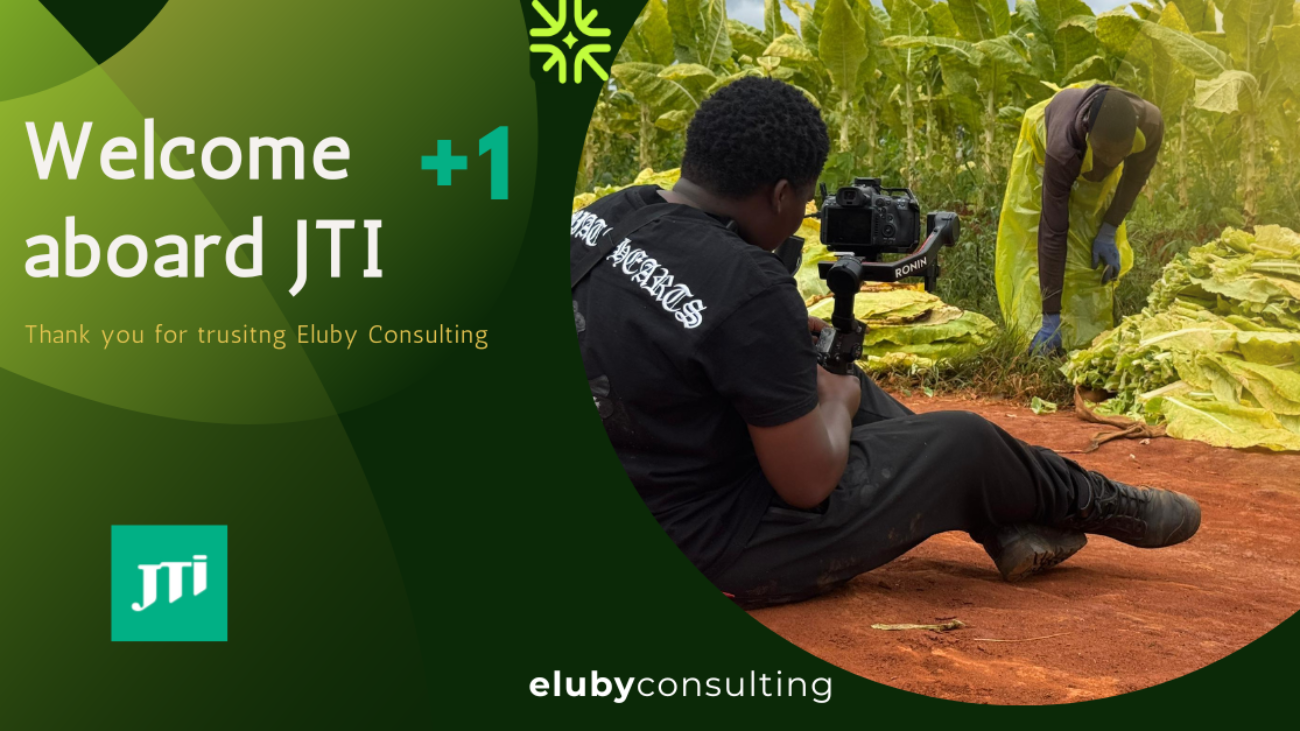
We’re proud to be part of JTI Malawi’s journey to becoming number one, not just in operations, but in how stories are told and impact is made. What began as a media collaboration has grown into a deeper strategic partnership through Eluby Consulting.
Together, we’re blending AI-powered storytelling, immersive content, and smart strategy to support everything from brand visibility to safety awareness, community engagement, and field-level tools.
At Eluby, we believe powerful stories can drive real results, and we’re here to help shape the narrative every step of the way.
hashtag#StorytellingForImpact hashtag#JTIMalawi hashtag#ElubyConsulting hashtag#Sustainability hashtag#FieldToFuture hashtag#InnovationInAfrica
We are pleased to welcome UNICEF as one of our clients
The Eluby family keeps growing. We are pleased to welcome UNICEF into our circle of impact partners.
At Eluby, we take pride in helping organisations like UNICEF transform complex information into creative solutions that inspire action and save lives.
Stay tuned to learn more about our ongoing project with UNICEF
#askeluby
Why sustainable development really matters
In today’s fast-changing world, sustainable development isn’t just a global goal it’s a business imperative. Organizations across Africa are realizing that long-term success means creating solutions that work for people, for the planet, and for the future.
But what does sustainable development really look like in practice? At Eluby Consulting, we believe it’s not just about adopting eco-friendly technologies or running social programs it’s about integrating sustainability into the DNA of your strategy, operations, and culture.
Why Sustainable Development Matters for Organizations
1️⃣ Resilience in a Changing Market
Markets shift, resources fluctuate, and technologies evolve. Sustainable organizations build the adaptability needed to survive disruption and seize opportunities.
2️⃣ Trust and Social License to Operate
Communities, customers, and partners trust organizations that actively contribute to social and environmental wellbeing. This trust is a currency that fuels growth.
3️⃣ Efficiency and Innovation
Sustainability drives innovation from reducing waste in supply chains to developing products that solve real community challenges.
Bridging the Gap Between Vision and Reality
While many organizations have sustainability goals, the challenge lies in turning them into measurable impact. This is where Eluby steps in:
- Research & Impact Measurement – Ensuring your efforts deliver tangible change.
- Technology Integration – Leveraging digital tools for smarter, greener operations.
- Capacity Building – Empowering teams to champion sustainability from within.
- Multimedia Storytelling – Crafting narratives that inspire adoption and action.
From Projects to Systems Change
Sustainable development isn’t a one-off project it’s a journey of system-wide transformation. By embedding sustainability into decision-making, organizations can:
- Reduce risks
- Strengthen their market position
- Make a lasting difference in the communities they serve
At Eluby, we help organizations move from bold ideas to lasting impact. Whether you’re launching a new initiative or rethinking your strategy, we’ll work with you to ensure sustainability is at the heart of your success story.
📩 Let’s build the future together: www.elubyconsulting.com
#SustainableDevelopment #InnovationAdoption #ImpactDriven #AskEluby
How to increase product adoption through storytelling
Before Malawians adopt your product, they must first understand and believe in your story.
“Every product has a function. But only those with a story get remembered, trusted, and used.”
In Malawi, launching a new product or service — whether it’s a mobile app, a farming tool, or a solar-powered device — doesn’t guarantee that people will adopt it. You may have the best innovation, but if people don’t connect with it emotionally or culturally, it often ends up underused or rejected.
At Eluby Consulting, we support innovators and development partners who are creating meaningful solutions for Malawians. We’ve seen that storytelling is one of the most powerful tools for getting products adopted — especially in rural, low-income, or first-time-user communities.
Let’s explore how storytelling is shaping the success of innovations in Malawi — and why your adoption strategy needs it.
Understanding the Adoption Challenge in Malawi
Across Malawi — from the bustling markets of Mzuzu to the maize fields of Dedza — people are surrounded by problems waiting to be solved. Many innovators and NGOs bring in new products like:
- Mobile money apps
- Fuel-efficient cookstoves
- Solar irrigation systems
- Health reporting tools
- Affordable ride-hailing platforms
But adoption is not automatic.
Even with training, demonstrations, or subsidies, many communities hesitate. Why? Because:
- The product is unfamiliar or seems “foreign”
- It doesn’t fit within local routines or beliefs
- The communication is too technical or in English only
- There’s no local champion or relatable example
In Malawi, people don’t just need to hear about a product — they need to see how it works, feel its relevance, and trust the people behind it.
The Power of Storytelling in Malawi
Storytelling is deeply woven into Malawian culture. From nthano (traditional folktales) shared by the fire, to radio dramas and church testimonies — stories help us make sense of the world.
“Facts tell, stories sell — especially in Malawi.”
Instead of saying “this product saves energy,” tell a story about Mai Phiri, a mother of five in Chikwawa, who cut her firewood use in half and started a small business with the money she saved.
Storytelling is what transforms a product into a personal experience. It builds emotional connection. It inspires word-of-mouth. And it’s far more powerful than a flyer with bullet points.
Why Storytelling Drives Adoption
It Builds Trust
Malawians trust what they see working in their community. If someone in the village testifies, “I used this and it worked,” others are more likely to try it.
It Makes Products Relatable
When a story features someone “like me” — a boda boda driver in Area 25 or a farmer in Kasungu — it creates a sense of, this is for me too.
It Simplifies Complex Ideas
A short video in Chichewa can explain a digital health tool better than a workshop in English.
It Triggers Emotion
Stories make people feel hope, pride, or relief — and these emotions drive action.
It Encourages Sharing
In Malawi, people pass on what they hear — at church, in maize mills, or on WhatsApp. A good story travels faster than any billboard.
Local Examples That Work
- The introduction of NEEF loans: When Neef first began many people were skeptical but after hearing testimonies many Malawians have adopted the innovation
- Airtel money mobile banking: Mobile banking was a new term to many Malawians, and many people did not trust the service. It was though thorough storytelling that even today people in rural and urban areas in Malawi utilize it.
- Gas cooking: Gas has always been known to have many casualties and may people try to run away from it. However, the benefits tend to surpass the casualties. Gas cooking has become a new source of cooking in Urban Malawi through the story telling of those who utilized it and the benefits they encountered from saving money to no longer worrying about cooking when the lights are off
How Eluby Uses Storytelling for Impact
At Eluby, we specialize in designing storytelling strategies that are rooted in local realities. Here’s what that looks like in Malawi:
Community Video Testimonials
We film real Malawians — not actors — explaining how a product or service helped them, in Chichewa, Yao, or Tumbuka.
Simplified, Visual Training Materials
Our team turns product manuals into comics, picture guides, and story-based lesson plans for extension workers.
Engaging Digital Campaigns
We create social media content that uses simple stories, local slang, and relatable characters — designed for mobile-first, data-light platforms.
Conclusion: Want Adoption? Tell a Better Story.
Malawians are smart, resourceful, and community-driven. But they don’t adopt new ideas blindly. If you want your product to succeed in the village or the city, it must come with a message that feels real, trustworthy, and relevant.
“Your innovation may solve a big problem — but your story will determine whether people believe it can solve their problem.”
At Eluby, we don’t just help you communicate. We help you connect.
Let’s Craft a Story That Moves Malawi
Whether you’re rolling out a new health intervention, agri-tech service, or ride-hailing platform, we’ll help you design story-first adoption strategies that drive action.
📩 askeluby@elubyconsulting.com
🌐 www.elubyconsulting.com
#AskEluby #StorytellingForChange #InnovationInMalawi

Why Your Innovation Isn’t Working in African Markets—And What You Can Do About It
You’ve invested time, money, and passion into building an innovative product or service that promises to change lives. But something’s not clicking. The uptake is low, users are disengaged, and your metrics are falling short of expectations.
So what’s going wrong?
At Eluby, we’ve worked with numerous organizations trying to drive adoption in Africa’s developing markets. Here are the most common reasons innovations fail—and how you can turn things around.
1. You Designed for the Market—But Not with the Market
Innovations often fail because they’re created for underserved markets, not with them. Without deep insights into local behaviors, needs, and constraints, even the best ideas can fall flat.
Fix it:
Adopt human-centered design. Involve end-users from the start, test prototypes locally, and adapt based on real feedback.
2. You Ignored the Adoption Journey
Innovation isn’t just about introduction—it’s about adoption. If users don’t understand your product, trust it, or see how it fits into their daily lives, they won’t use it.
Fix it:
Build an adoption strategy that goes beyond launch. Use storytelling, relatable use cases, community ambassadors, and phased onboarding to nurture long-term use.
3. Your Technology Is Advanced—But Your Audience Isn’t Ready
Digital tools can be powerful, but rolling them out in low-tech settings without the necessary skills or infrastructure is a recipe for disappointment.
Fix it:
Invest in capacity building and training. Help users build the confidence and skills to interact with your product. Consider low-tech alternatives or hybrid approaches where necessary.
4. Your Innovation Exists in a Vacuum
You can’t disrupt a system you don’t understand. Many innovations are introduced without alignment to existing ecosystems, partnerships, or policy environments.
Fix it:
Engage in strategic partnerships. Work with local NGOs, government bodies, and community organizations that already have trust and reach. Tailor your offering to complement, not compete.
5. Your Story Isn’t Resonating
If your communication is jargon-heavy or irrelevant to your audience’s values, your message won’t stick.
Fix it:
Use impactful multimedia storytelling to build emotional connections. Show real people benefiting from your innovation. Speak the local language—literally and culturally.
Let’s turn your great idea into lasting impact.
Contact us today: askeluby@elubyconsulting.com